
Best Car Insurance for Young Drivers in 2026
Young drivers pay more for car insurance than any other age group, and the gap between the cheapest and most expensive insurer for the same driver can run into hundreds of dollars a year. This article breaks down what young drivers actually pay in 2026, which companies tend to offer the most competitive rates, which discounts are worth pursuing, and how to compare quotes so you’re not overpaying for the same coverage.
Quick Answer
There’s no single “best” company for every young driver — rates depend heavily on age, state, and driving record. But several national and regional insurers consistently show up with competitive pricing and strong service for young drivers: USAA (for military families), Erie and Auto-Owners (regional, often cheapest for teens where available), and State Farm, GEICO, and Travelers (widely available nationally). Staying on a parent’s policy is almost always cheaper than buying an individual policy until roughly age 22–23.
Why Young Drivers Pay More
Insurers price policies based on risk, and crash data consistently shows that drivers under 25 — especially those under 20 — have the highest accident rates of any age group, according to research cited by the Centers for Disease Control and Prevention. Inexperience behind the wheel, higher rates of distracted or risky driving, and a thinner driving history (which gives insurers less data to work with) all push premiums higher. Rates typically decline in steps around ages 19, 21, and 25, as insurers gain more evidence that a driver is low-risk.
Average Cost of Best Car Insurance for Young Drivers in 2026
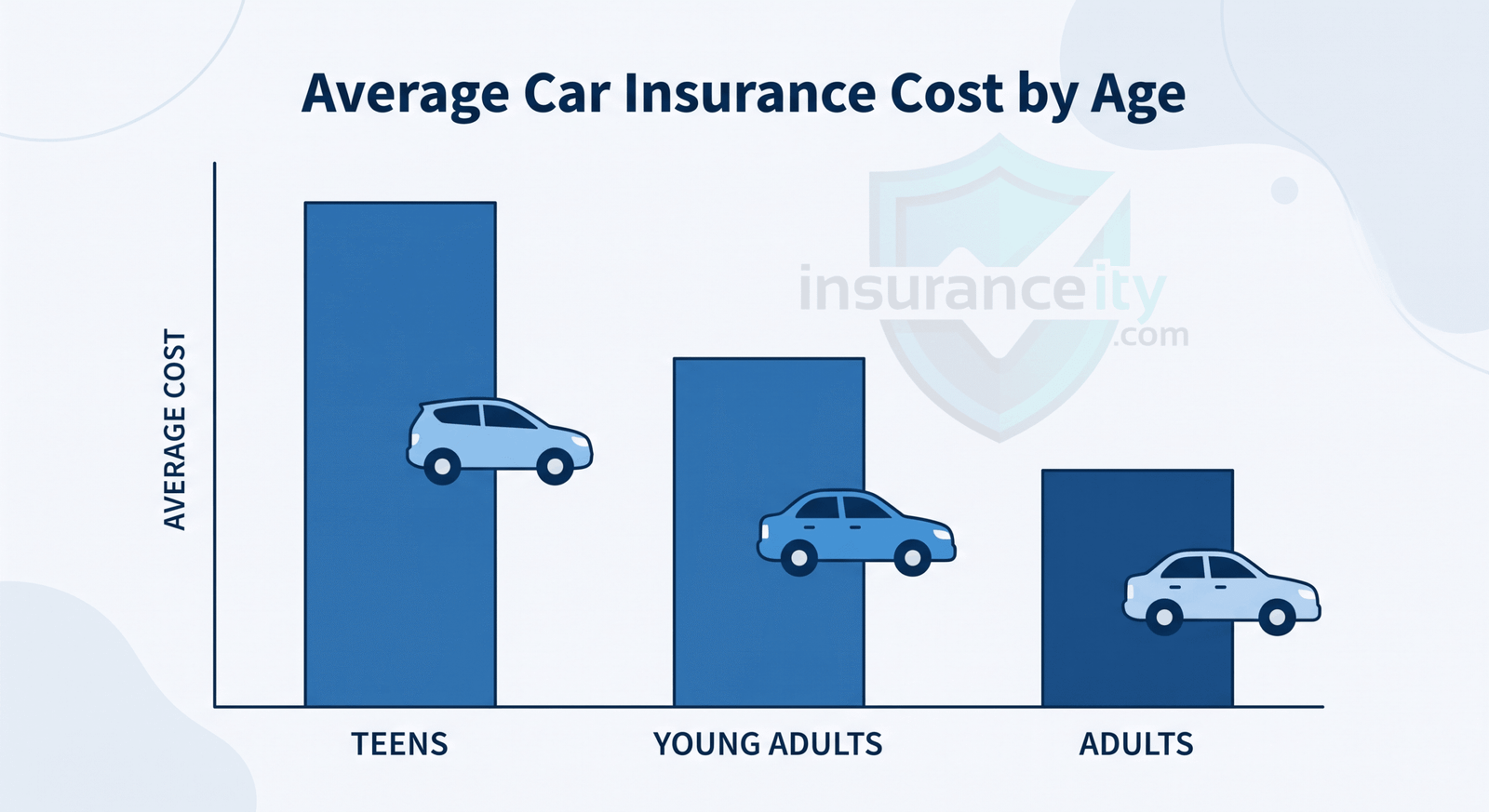
National rate analyses from multiple research firms paint a consistent picture: teen drivers pay the most, young adults pay less than teens but still well above the all-driver average, and costs fall steadily through the mid-20s.
- 16-year-olds are the most expensive group to insure. Adding a 16-year-old to a parent’s existing policy is typically far cheaper than putting them on their own policy — often thousands of dollars less per year — because the family’s driving history and multi-driver discounts offset some of the teen’s risk.
- 18-year-olds buying an individual full-coverage policy commonly see national average estimates in the range of roughly $500–$600 per month, though this varies widely by state, insurer, and vehicle. Minimum-coverage policies cost meaningfully less than full coverage.
- 20-to-25-year-olds see rates drop noticeably compared with teens, but young adults still pay more than the overall national average, which recent industry rate studies put at roughly $2,500 per year for a driver with a clean record carrying full coverage.
- 25-year-olds are often used as the benchmark for “young adult” rates in industry studies, and this is typically the age where premiums start converging toward standard adult pricing.
These are national averages, not personal quotes. Your actual premium depends on your ZIP code, the car you drive, your coverage limits and deductibles, your driving record, and — in most states — your credit-based insurance score.
Best Car Insurance Companies for Young Drivers
No single insurer is “the cheapest” everywhere — availability, underwriting rules, and pricing all vary by state. That said, several companies come up repeatedly in independent rate analyses and customer-satisfaction surveys as strong options for young drivers.
| Insurer | Best For | Why It Stands Out | Important Consideration |
|---|---|---|---|
| USAA | Military families | Consistently among the lowest average rates for young drivers in national studies | Only available to active-duty military, veterans, and their immediate family |
| Erie | Teens and college students | Frequently ranked as a top overall pick for teen and young-driver rates and claims service; offers a discount for students who leave their car at home while away at school | Regional carrier — not sold in every state |
| Auto-Owners | Low complaint volume | Often cited for competitive teen rates and a low complaint ratio with state regulators | Regional carrier, sold through independent agents only |
| State Farm | Nationwide availability and discounts | Largest U.S. auto insurer; usage-based telematics program and strong good-student discount | Rates vary significantly by state and driver profile |
| GEICO | Digital tools and broad availability | Competitive national pricing and a widely used mobile app | Rates can vary more by state than some regional carriers |
| Travelers | National carrier with solid claims ratings | Regularly scores well among national companies for teen and young-adult pricing | Discount eligibility and availability vary by state |
| Nationwide | Adding a young driver to a family policy | Often among the cheapest options specifically for adding a young adult to an existing policy | Individual (standalone) policy pricing may be less competitive |
Treat this table as a starting point, not a final answer. The only way to know your real cost is to request quotes from several insurers using identical coverage limits and deductibles.
Coverage Types Explained
Understanding what each coverage actually does helps you compare quotes accurately and avoid buying coverage you don’t need — or skipping coverage you do.
| Coverage | What It Covers | What It Doesn’t Cover |
|---|---|---|
| Bodily injury liability | Medical costs for other people if you’re at fault in an accident | Your own injuries |
| Property damage liability | Repairs to another person’s vehicle or property you damage | Damage to your own car |
| Collision | Damage to your own car from a crash, regardless of fault | Damage to other people’s property |
| Comprehensive | Non-collision damage: theft, vandalism, weather, animal strikes | Collision damage |
| Uninsured/underinsured motorist | Your costs if the at-fault driver has no insurance or not enough | Damage caused when you’re at fault |
| Personal injury protection (PIP) / MedPay | Medical bills for you and your passengers regardless of fault | Property damage |
Liability coverage is legally required in nearly every state (New Hampshire is the one exception, though it still requires proof you can cover damages if you cause a crash). Collision and comprehensive are optional but are usually required if you’re financing or leasing the vehicle, and are worth considering for a newer or more expensive car.
Discounts and Ways to Save
Young drivers have access to several discounts that can meaningfully reduce a premium, though the exact percentage saved and eligibility rules vary by insurer and state.
- Good student discount — Available from most major insurers for students who maintain a set GPA (commonly around a B average or 3.0 GPA). This is one of the more impactful discounts available to young drivers.
- Staying on a parent’s policy — Adding a teen or young adult to an existing family policy is usually far cheaper than buying a separate individual policy, at least until the driver is in their early 20s.
- Student-away-at-school discount — Some insurers, including Erie, offer a discount when a young driver attends school a set distance from home and doesn’t regularly use the insured vehicle.
- Telematics / usage-based programs — Programs like State Farm’s Drive Safe & Save or similar apps from other insurers track driving behavior (braking, speed, phone use) and can reduce premiums for demonstrably safe drivers.
- Defensive driving or driver’s education courses — Many states and insurers offer a discount for completing an approved course, particularly for teen drivers.
- Multi-policy (bundling) discounts — Combining auto insurance with renters or homeowners insurance, or insuring multiple vehicles on one policy, can lower the overall cost.
- Vehicle choice — Insuring a modest sedan or SUV with strong safety ratings and a lower repair cost is typically cheaper than insuring a sports car or luxury vehicle.
None of these discounts is guaranteed to produce a specific savings amount — availability and size of the discount vary by company and state, so it’s worth asking each insurer directly which discounts you qualify for.
State Differences
Car insurance requirements and average costs vary significantly by state, and young drivers should not assume their home state’s rules match another state’s. A few things that differ by state:
- Minimum liability limits. Most states require liability coverage expressed as three numbers (for example, 25/50/25), representing per-person bodily injury, per-accident bodily injury, and property damage limits. These minimums differ by state and have changed recently in some states — for example, New Jersey’s minimum limits increased at the start of 2026, and several other states raised their minimums during 2025.
- No-fault vs. at-fault systems. Some states require personal injury protection (PIP) regardless of who caused the accident; others rely on a traditional at-fault liability system.
- Whether gender can be used in pricing. A handful of states — including Hawaii, Massachusetts, Michigan, Montana, North Carolina, and Pennsylvania — prohibit insurers from using gender as a rating factor, which can affect how much a teenage male versus female driver pays for an otherwise identical policy.
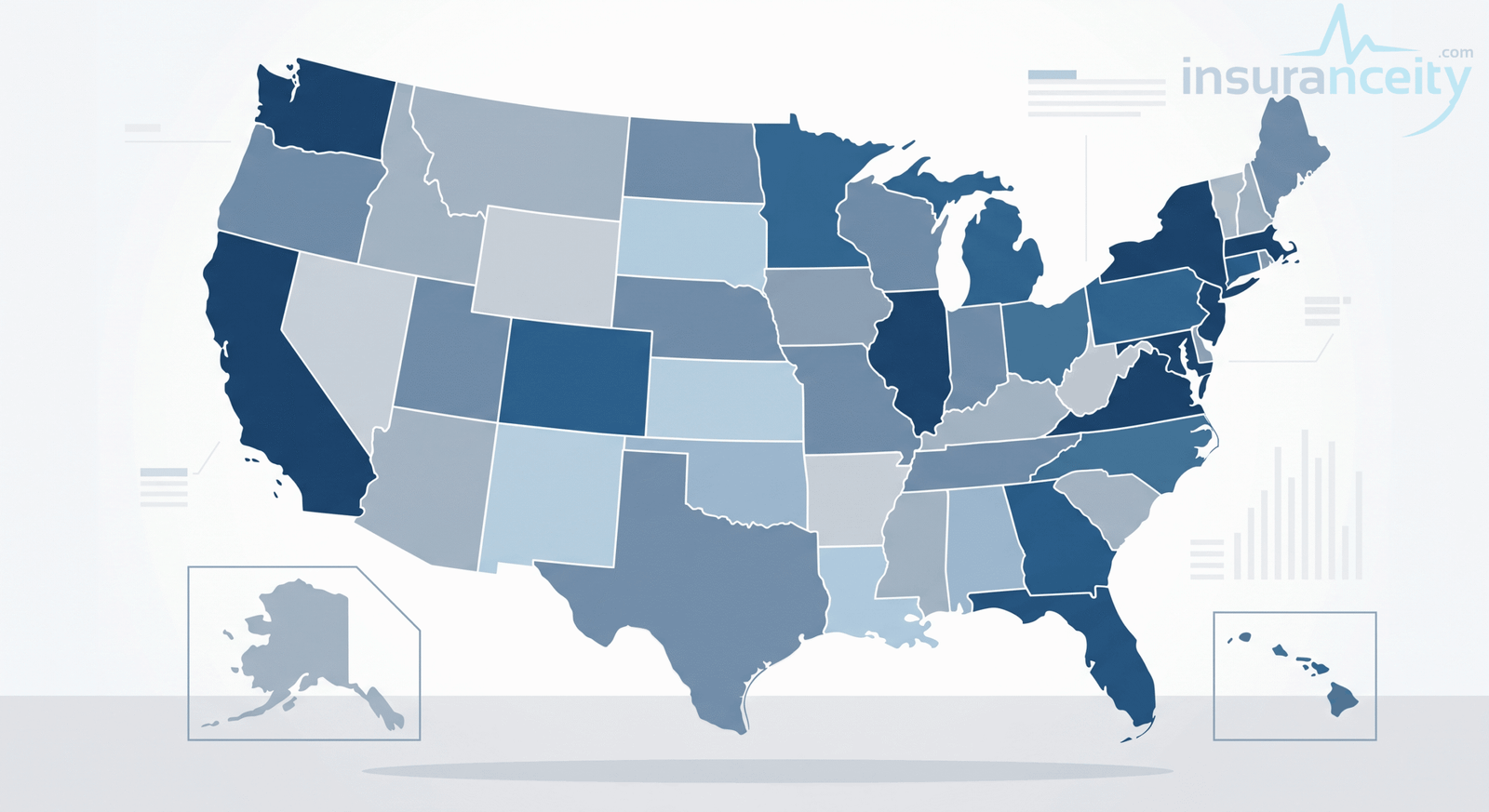
- Average cost by state. Rate studies consistently show wide swings in average premiums for young drivers depending on the state, with some Southern and Gulf Coast states tending to rank among the more expensive for teen and young-driver coverage.
Because these rules change, confirm your state’s current minimum coverage requirements with your state insurance department or with the insurer directly before you buy.
Family Policy vs. Individual Policy
| Option | Typical Cost | Pros | Cons |
|---|---|---|---|
| Added to a parent’s policy | Generally lower than a standalone policy | Benefits from the family’s driving history and existing discounts; simpler to manage | Parent remains responsible for the policy; a young driver’s accident can raise the whole family’s rate |
| Standalone individual policy | Generally higher, especially before age 21–23 | Builds an independent insurance and credit history; full control over coverage choices | Loses the benefit of an experienced co-insured driver’s history; often costs significantly more |
Most rate analyses suggest that staying on a family policy remains the cheaper path until roughly age 22–23, after which the cost gap narrows and, for some drivers, may reverse.
How to Choose Car Insurance as a Young Driver
- Decide on coverage needs first. Determine whether you need state-minimum liability only or full coverage (liability plus collision and comprehensive), based on your vehicle’s value and whether it’s financed.
- Get quotes from at least three to five insurers, including at least one regional carrier if available in your state — regional companies often price young drivers more competitively than large national brands.
- Compare identical coverage limits and deductibles across every quote. A cheaper premium is meaningless if it comes with lower liability limits or a higher deductible.
- Ask specifically about young-driver discounts — good student, driver’s education, telematics, and student-away-at-school discounts aren’t always applied automatically.
- Check the insurer’s financial strength and complaint record. AM Best ratings indicate financial stability, and your state insurance department’s complaint index shows how the company handles claims relative to its size.
- Weigh family policy vs. individual policy based on your age, credit history, and whether you’re likely to move states or change vehicles soon.
- Read the exclusions before you buy. Understand what isn’t covered — especially around ride-sharing use, roommates or friends who borrow the car, and out-of-state driving.
- Revisit your policy annually. Rates and discount eligibility change as you age, build a driving record, and your credit profile matures.
Common Mistakes Young Drivers Make
- Only getting one quote. Rates for the same driver can vary substantially between insurers, so comparing multiple companies is one of the most effective ways to save.
- Buying the state minimum without understanding the trade-off. Minimum liability coverage is the cheapest legal option, but it may not be enough to cover a serious accident, leaving the driver personally responsible for costs above the policy limit.
- Letting coverage lapse. A gap in coverage — even briefly — can raise future premiums and, in most states, is illegal if the vehicle is still registered.
- Not asking about every available discount. Many discounts require the policyholder to request them or provide documentation (like a transcript for a good-student discount).
- Ignoring the vehicle’s impact on cost. The specific make and model you drive can change your premium substantially, sometimes more than your age does.
- Assuming one company is cheapest everywhere. The “best” insurer for a young driver in one state or ZIP code is often not the best option in another.
Frequently Asked Questions
Is it cheaper to stay on my parents’ insurance or get my own policy?
For most drivers, staying on a parent’s policy is cheaper, generally until the early-to-mid 20s. Individual policies typically cost more because the young driver no longer benefits from an experienced co-insured driver’s history and existing multi-policy discounts.
What is the cheapest car insurance company for an 18-year-old?
It depends on your state and driver profile, but national rate studies frequently list USAA (for military families), regional carriers like Erie and Auto-Owners where available, and national companies such as GEICO, State Farm, and Travelers among the more competitively priced options for 18-year-olds.
Do good grades really lower car insurance rates?
Many insurers offer a good student discount, typically for maintaining roughly a B average or 3.0 GPA. The size of the discount varies by insurer, but it’s one of the more consistently available discounts for young drivers.
How much does car insurance drop when you turn 25?
Insurers commonly treat 25 as a pricing milestone, since it correlates with more driving experience. Rate studies generally show a meaningful decrease in average premiums between the late teens/early 20s and age 25, though the exact drop varies by driver and insurer.
Does my credit score affect my car insurance rate?
In most states, insurers can use a credit-based insurance score as one rating factor. A small number of states restrict or prohibit this practice, so the impact depends on where you live.
Is minimum liability coverage enough for a young driver?
Minimum liability coverage satisfies the legal requirement to drive, but it may not fully cover a serious accident’s costs, which could leave you personally responsible for amounts above your policy limits. Whether minimum coverage is “enough” depends on your assets, the value of your vehicle, and your risk tolerance — a licensed insurance agent can help you think through the trade-offs for your situation.
Can insurers charge young male drivers more than young female drivers?
In most states, yes — insurance data has historically shown higher accident rates and costs for young male drivers, and insurers in most states are permitted to factor gender into pricing for younger age groups. Several states, including Hawaii, Massachusetts, Michigan, Montana, North Carolina, and Pennsylvania, prohibit using gender as a rating factor.
What discounts should a young driver always ask about?
At minimum, ask about the good student discount, any driver’s education or defensive driving course discount, telematics/usage-based programs, and multi-policy bundling — these are the discounts most consistently available to young drivers across insurers.
This article provides general educational information about car insurance and is not personalized financial, legal, or insurance advice. Insurance rules, minimum coverage requirements, and pricing change over time and vary by state and insurer. Confirm current requirements with your state insurance department and get personalized quotes directly from insurers or a licensed agent before making a purchasing decision.
Sources
- National Association of Insurance Commissioners (NAIC) — “Auto Insurance” — https://content.naic.org/insurance-topics/auto-insurance — Regulatory overview of how auto liability coverage works and how state rules generally apply.
- U.S. News & World Report — “Average Cost of Best Car Insurance for Young Drivers in the U.S.” — https://www.usnews.com/insurance/auto/average-cost-of-car-insurance — Independent rate analysis (with Quadrant Information Services) used for national average premium figures.
- Forbes Advisor — “Best Car Insurance for Young Drivers For Teens And Young Drivers Of 2026” — https://www.forbes.com/advisor/car-insurance/best-car-insurance-for-teens/ — Independent scoring of insurers on rates, claims service, and consumer sentiment for teen and young-driver policies.
- MoneyGeek — “Average Car Insurance Rates by Age and Gender” — https://www.moneygeek.com/insurance/auto/average-car-insurance-rates-by-age-and-gender/ — Rate data by age and gender used for cost-by-age figures.
- MoneyGeek — “Cheapest Best Car Insurance for Young Drivers for Young Adults” — https://www.moneygeek.com/insurance/auto/cheapest-car-insurance-for-young-adults/ — Comparative rate data across insurers for young adult drivers.
- Insurance.com — “Best cheap car insurance for teens and young drivers in 2026” — https://www.insurance.com/auto-insurance/life-events/car-insurance-for-young-adults.aspx — Rate and customer-satisfaction survey data for teen and young-driver policies.
- NerdWallet — “The Minimum Required Car Insurance by State” — https://www.nerdwallet.com/insurance/auto/learn/minimum-car-insurance-requirements — State-by-state minimum liability requirement overview.
- CNBC Select — “What are the state minimum car insurance requirements in 2026?” — https://www.cnbc.com/select/state-minimum-car-insurance-requirements/ — Overview of state minimum requirements, no-fault rules, and New Hampshire’s exception.
- CarInsurance.com — “Average Car Insurance Rates by Age & Gender” — https://www.carinsurance.com/average-rates-by-age.aspx — Sample-profile premium data by driver age.
Internal Linking Suggestions
- Anchor text: “state minimum liability requirements” → Suggested page: “Car Insurance Requirements by State” → Insert in the “State Differences” section.
- Anchor text: “how full coverage works” → Suggested page: “Full Coverage vs. Liability-Only Car Insurance” → Insert in the “Coverage Types Explained” section.
- Anchor text: “good student discount eligibility” → Suggested page: “Car Insurance Discounts Explained” → Insert in the “Discounts and Ways to Save” section.
- Anchor text: “adding a teen driver to your policy” → Suggested page: “How to Add a Driver to Your Car Insurance Policy” → Insert in “Family Policy vs. Individual Policy.”
- Anchor text: “telematics and usage-based insurance” → Suggested page: “How Telematics Car Insurance Programs Work” → Insert in “Discounts and Ways to Save.”
- Anchor text: “comparing car insurance quotes” → Suggested page: “Car Insurance Basics” → Insert in “How to Choose Best Car Insurance for Young Drivers.”
- Anchor text: “uninsured motorist coverage” → Suggested page: “Uninsured and Underinsured Motorist Coverage Explained” → Insert in the coverage table section.
- Anchor text: “AM Best financial strength ratings” → Suggested page: “How to Check an Insurance Company’s Financial Strength” → Insert in “How to Choose Car Insurance as a Young Driver.”
External Sources
- National Association of Insurance Commissioners (NAIC) — https://content.naic.org/insurance-topics/auto-insurance
- U.S. News & World Report Insurance — https://www.usnews.com/insurance/auto/average-cost-of-car-insurance
- Forbes Advisor — https://www.forbes.com/advisor/car-insurance/best-car-insurance-for-teens/
- NerdWallet — https://www.nerdwallet.com/insurance/auto/learn/minimum-car-insurance-requirements
- CNBC Select — https://www.cnbc.com/select/state-minimum-car-insurance-requirements/
FAQs
(Integrated into the article above under “Frequently Asked Questions.” Questions covered: parent’s policy vs. own policy, cheapest company for an 18-year-old, effect of good grades on rates, rate changes at age 25, credit score impact, whether minimum liability is enough, gender-based pricing rules, and which discounts to ask about.)
Editorial / YMYL Quality Notes
- All premium and rate figures are presented as ranges or averages drawn from named third-party rate studies, not as guaranteed personal quotes.
- No insurer is declared “the best” or “the cheapest” unconditionally; recommendations are contextual (e.g., “best for military families,” “best for college students”) and tied to cited industry analyses.
- State insurance requirements are described as general and subject to change, with an explicit instruction for readers to verify current rules with their state insurance department.
- The article does not provide individualized financial or legal advice and includes a clear educational-content disclaimer.
- No fabricated statistics, company partnerships, awards, or endorsements are included. All company mentions are based on findings reported by independent rate-analysis and consumer-research publications cited in the Sources section.
- Because insurance pricing and discount programs change frequently, this article should be reviewed and refreshed periodically to keep cost figures and state-rule references current.